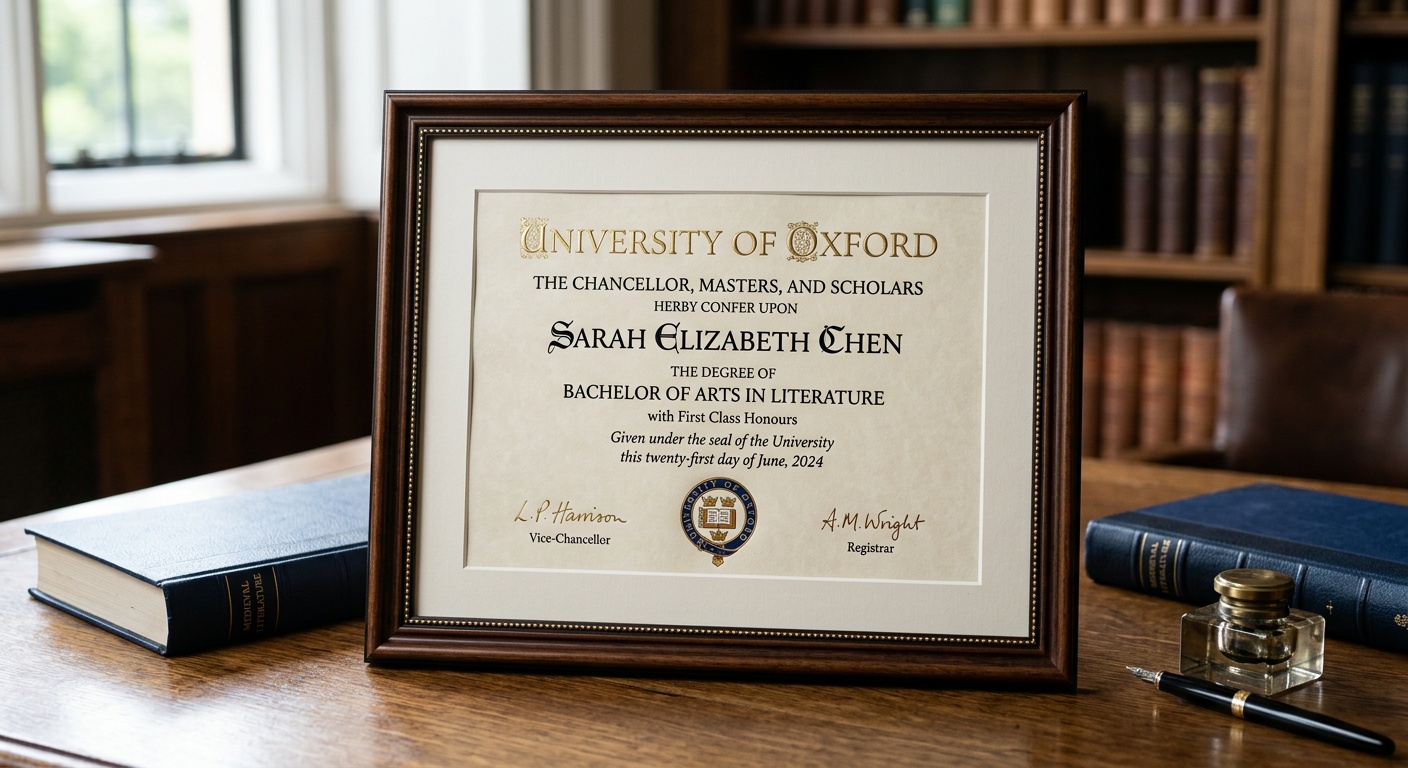
How To Get A Foreign Degree Recognized After Relocating Abroad
Reading time: 9 minutes
Table of Contents
- Why Credential Recognition Matters More Than Ever
- The Core Recognition Process
- How Recognition Differs by Country
- Common Challenges and How to Solve Them
- Real Stories: Three Relocation Journeys
- Comparing Recognition Timelines
- FAQs
- Your Roadmap Forward
Moving abroad in 2026 with a diploma in hand feels like carrying a golden ticket—until you discover that ticket might not be valid at the border of your new career. Thousands of skilled professionals, from nurses in Manila to engineers in Lagos, hit the same wall every year: a foreign degree that looks impressive on paper but means nothing to a local licensing board until it’s officially recognized.
Here’s the straight talk: credential recognition isn’t bureaucratic red tape designed to frustrate you. It’s a verification system, and once you understand how it works, you can move through it strategically instead of stumbling through it blindly.
Why Credential Recognition Matters More Than Ever
Global mobility has surged. According to the OECD’s 2025 International Migration Outlook, over 281 million people now live outside their country of birth, and skilled migration corridors—India to Canada, Philippines to the UK, Nigeria to Germany—continue expanding into 2026. Yet a UNESCO report from late 2025 found that nearly 40% of skilled migrants work below their qualification level simply because their credentials weren’t formally recognized.
That gap isn’t just frustrating—it’s expensive. A World Education Services (WES) study estimated that underemployment due to unrecognized degrees costs skilled immigrants in North America roughly $10 billion annually in lost wages. Recognition, in other words, isn’t a formality. It’s the difference between practicing your profession and starting over from scratch.
The Core Recognition Process
Every country has its own quirks, but the underlying process follows a familiar rhythm. Think of it as four checkpoints you’ll pass through, regardless of destination.
Step 1: Determine Who Evaluates Your Degree
Most countries route this through one of three channels:
- A national credential evaluation body (e.g., WES in Canada/US, UK ECCTIS, Germany’s Zentralstelle für ausländisches Bildungswesen)
- A professional licensing board (for regulated fields like medicine, law, engineering, or teaching)
- The employer or university itself, for roles where formal government recognition isn’t legally required
Step 2: Gather and Authenticate Your Documents
This typically means transcripts, diplomas, course syllabi, and sometimes proof of accreditation from your home institution. Many countries now require documents to be authenticated via apostille under the Hague Convention—as of 2026, 126 countries are signatories, which has significantly sped up cross-border verification compared to the old embassy-legalization route.
Step 3: Submit for Evaluation
Depending on the body, you’ll receive either a general equivalency statement (“this is comparable to a Bachelor’s degree”) or a course-by-course breakdown used for licensing purposes. General evaluations usually take 2–6 weeks; course-by-course can stretch to 3–4 months.
Step 4: Bridge the Gaps
If your degree isn’t a full match—common in regulated professions—you may need bridging courses, supervised practice hours, or a licensing exam. This is often the longest and most emotionally draining stage, so plan for it early rather than treating it as a surprise.
How Recognition Differs by Country
Well, here’s the nuance most guides skip: recognition isn’t one system, it’s dozens of overlapping systems depending on your destination and profession.
- Canada: Provincial regulators control licensed professions, while WES handles general academic equivalency. A nursing degree recognized in Ontario may still need additional steps in British Columbia.
- Germany: The “Anerkennung” system is notably rigorous for regulated professions but has streamlined significantly since the 2024 Skilled Immigration Act updates, cutting average processing time to about 3 months for many trades and technical degrees.
- Australia: Uses a skills-assessment model tied directly to visa eligibility—your degree assessment often happens before you even land.
- United Kingdom: UK ECCTIS (formerly UK NARIC) issues “Statements of Comparability,” though professional bodies like the GMC or NMC run separate, stricter processes for medicine and nursing.
- UAE and Gulf states: Ministry of Education equalization certificates are mandatory even for private-sector jobs in many cases, adding a layer most newcomers don’t anticipate.
Common Challenges and How to Overcome Them
Challenge 1: Institutions That No Longer Exist or Aren’t Accredited Internationally
If your university merged, closed, or was never internationally accredited, evaluators may ask for archival records. Solution: Contact your home country’s Ministry of Education for a verification letter before you leave—doing this in advance saves months later.
Challenge 2: Field-Specific Licensing Gaps
Doctors, lawyers, and teachers face the steepest curve since these professions protect public safety and are tightly regulated. Solution: Research the specific licensing board for your destination region—not just the country—since requirements often vary by state or province.
Challenge 3: Translation and Terminology Mismatches
A “Licenciatura” in Latin America doesn’t map neatly onto a “Bachelor’s degree” framework, and evaluators sometimes default to conservative equivalencies. Solution: Submit detailed course descriptions and credit-hour breakdowns, not just the diploma, to strengthen your case for a fair evaluation.
Real Stories: Three Relocation Journeys
Case 1 — Amara, Nigeria to Canada (Nursing): Amara’s Bachelor of Nursing Science was recognized academically within six weeks via WES, but full licensure through the National Nursing Assessment Service took 14 months, including a competency exam and supervised clinical hours. She now works in Toronto and mentors newer arrivals through the same process.
Case 2 — Diego, Argentina to Germany (Mechanical Engineering): Diego’s degree was evaluated as “largely equivalent” under Germany’s 2025 streamlined framework for engineers, requiring only a professional German language certificate (B2 level) before his Anerkennung was finalized in just under four months.
Case 3 — Priya, India to Australia (Software Engineering): Because software engineering isn’t a licensed profession in Australia, Priya skipped formal government recognition entirely—her skills assessment through Engineers Australia was tied directly to her visa application, and employers cared more about her portfolio than her degree’s official status.
Comparing Recognition Timelines and Costs (2026 Estimates)
| Destination | Average Processing Time | Typical Cost (USD) | Regulated Professions Involved |
|---|---|---|---|
| Canada | 6 weeks (general) / 12–18 months (licensed) | $220–$450 | Yes |
| Germany | 3–6 months | $120–$700 | Yes |
| Australia | 4–10 weeks | $400–$1,000 | Depends on occupation list |
| United Kingdom | 2–5 weeks (general) / 6–24 months (medicine/nursing) | $65–$180 | Yes |
| UAE | 4–8 weeks | $150–$300 | Yes (most sectors) |
Visualizing the Delay: Regulated vs. Non-Regulated Professions
The chart below illustrates average additional months required for full licensure in regulated fields compared to general academic recognition alone.
As Dr. Elena Fischer, a migration policy researcher at the Bonn-based Institute for Employment Research, put it in a 2025 interview: “Recognition systems are catching up to global mobility, but the gap between academic equivalency and professional licensure remains the single biggest bottleneck for skilled migrants.”
FAQs
Do I need to start the recognition process before I relocate?
Ideally, yes. Many countries—especially Australia and Canada for regulated professions—allow or require skills assessments before your visa is even approved. Starting early also gives you time to request missing documents from your home institution while you still have local contacts and easier access to records.
What happens if my degree isn’t recognized at all?
A full rejection is rare; more common is a “partial equivalency” outcome, meaning you’ll need bridging courses or supplementary exams. In some cases, pursuing a local postgraduate qualification is actually faster than fighting for full recognition of an unfamiliar undergraduate program, especially in niche fields.
Can work experience compensate for an unrecognized degree?
Often, yes. Many evaluators, particularly in the UK and Australia, use a combined framework that weighs verified professional experience alongside academic credentials. Documenting your work history with reference letters, project details, and employer verification can meaningfully offset gaps in formal equivalency.
Your Roadmap Forward
Credential recognition is becoming faster and more digitized—2026 has already seen expanded apostille adoption and AI-assisted document verification pilots in Germany and Canada—but the human effort of preparation still falls on you. Here’s how to move forward with intention:
- Research your specific occupation’s regulator in your destination region before you pack a single box—generic country-level research isn’t enough.
- Request certified transcripts and apostilled documents early, ideally while you still live near your home institution.
- Budget both time and money using realistic ranges like those above, not best-case scenarios you find in forum posts.
- Build a bridging plan for licensed professions—identify supplementary courses or exams before you need them urgently.
- Document your professional experience thoroughly, since it can strengthen a borderline evaluation.
Relocation is ultimately a story about rebuilding professional identity in unfamiliar terrain, and credential recognition is simply the first chapter. Get it right, and everything else—job applications, licensing exams, salary negotiations—becomes measurably easier.
So, what’s your next concrete step this week: requesting your transcripts, researching your professional board, or budgeting for the months ahead?